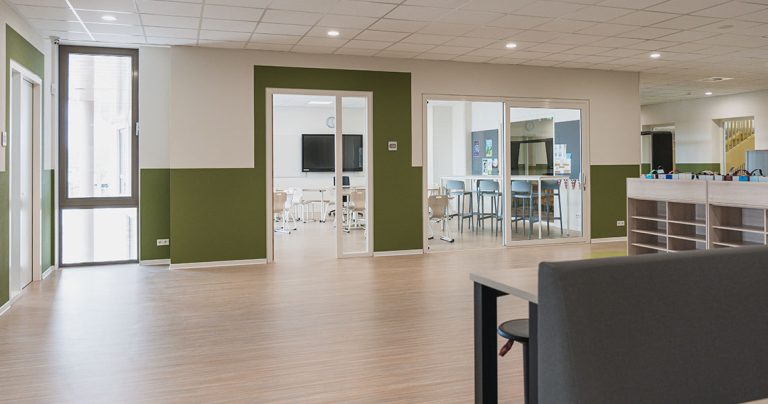
Finalise a large classroom whiteboard size from a floor plan alone, and a board that looked adequate on paper can turn out illegible from the back row once the room is actually in use. Testing sightlines before finalising size, standing at the furthest seat and checking legibility, catches that mismatch before an order is placed. Do that test and the size chosen is the size that actually works, not just the size that fit the drawing. The test itself takes an afternoon; getting it wrong takes considerably longer to fix.

Array
(
    [1049] => WP_Post Object
        (
            [ID] => 1049
            [post_author] => 1
            [post_date] => 2026-06-17 10:36:57
            [post_date_gmt] => 2019-08-05 13:54:24
            [post_content] =>
            [post_title] => Products
            [post_excerpt] =>
            [post_status] => publish
            [comment_status] => closed
            [ping_status] => closed
            [post_password] =>
            [post_name] => whiteboards-5
            [to_ping] =>
            [pinged] =>
            [post_modified] => 2026-06-17 10:36:57
            [post_modified_gmt] => 2026-06-17 10:36:57
            [post_content_filtered] =>
            [post_parent] => 0
            [guid] => https://chameleonwriting.falkor.alcor.cloud/?p=1049
            [menu_order] => 1
            [post_type] => nav_menu_item
            [post_mime_type] =>
            [comment_count] => 0
            [filter] => raw
            [db_id] => 1049
            [menu_item_parent] => 0
            [object_id] => 1049
            [object] => custom
            [type] => custom
            [type_label] => Custom Link
            [title] => Products
            [url] => #
            [target] =>
            [attr_title] =>
            [description] =>
            [classes] => Array
                (
                    [0] =>
                )

            [xfn] =>
        )

    [12842] => WP_Post Object
        (
            [ID] => 12842
            [post_author] => 82
            [post_date] => 2026-06-17 10:36:57
            [post_date_gmt] => 2023-08-31 08:07:16
            [post_content] =>
            [post_title] =>
            [post_excerpt] =>
            [post_status] => publish
            [comment_status] => closed
            [ping_status] => closed
            [post_password] =>
            [post_name] => 12842
            [to_ping] =>
            [pinged] =>
            [post_modified] => 2026-06-17 10:36:57
            [post_modified_gmt] => 2026-06-17 10:36:57
            [post_content_filtered] =>
            [post_parent] => 0
            [guid] => https://chameleonwriting.falkor.alcor.cloud/?p=12842
            [menu_order] => 67
            [post_type] => nav_menu_item
            [post_mime_type] =>
            [comment_count] => 0
            [filter] => raw
            [db_id] => 12842
            [menu_item_parent] => 0
            [object_id] => 12839
            [object] => page
            [type] => post_type
            [type_label] => Page
            [url] => https://chameleonwriting.com/en/references-3/
            [title] => References
            [target] =>
            [attr_title] =>
            [description] =>
            [classes] => Array
                (
                    [0] =>
                )

            [xfn] =>
        )

    [11862] => WP_Post Object
        (
            [ID] => 11862
            [post_author] => 82
            [post_date] => 2026-06-17 10:36:57
            [post_date_gmt] => 2023-08-21 13:36:51
            [post_content] =>
            [post_title] => pCon
            [post_excerpt] =>
            [post_status] => publish
            [comment_status] => closed
            [ping_status] => closed
            [post_password] =>
            [post_name] => pcon-data
            [to_ping] =>
            [pinged] =>
            [post_modified] => 2026-06-17 10:36:57
            [post_modified_gmt] => 2026-06-17 10:36:57
            [post_content_filtered] =>
            [post_parent] => 4705
            [guid] => https://chameleonwriting.falkor.alcor.cloud/?p=11862
            [menu_order] => 68
            [post_type] => nav_menu_item
            [post_mime_type] =>
            [comment_count] => 0
            [filter] => raw
            [db_id] => 11862
            [menu_item_parent] => 0
            [object_id] => 4701
            [object] => page
            [type] => post_type
            [type_label] => Page
            [url] => https://chameleonwriting.com/en/information/chameleon-now-available-in-pcon/
            [title] => pCon
            [target] =>
            [attr_title] =>
            [description] =>
            [classes] => Array
                (
                    [0] =>
                )

            [xfn] =>
        )

    [32752] => WP_Post Object
        (
            [ID] => 32752
            [post_author] => 85
            [post_date] => 2026-06-17 10:36:57
            [post_date_gmt] => 2025-08-07 10:59:20
            [post_content] =>
            [post_title] => Order Samples
            [post_excerpt] =>
            [post_status] => publish
            [comment_status] => closed
            [ping_status] => closed
            [post_password] =>
            [post_name] => order-samples-2
            [to_ping] =>
            [pinged] =>
            [post_modified] => 2026-06-17 10:36:57
            [post_modified_gmt] => 2026-06-17 10:36:57
            [post_content_filtered] =>
            [post_parent] => 0
            [guid] => https://chameleonwriting.com/?p=32752
            [menu_order] => 69
            [post_type] => nav_menu_item
            [post_mime_type] =>
            [comment_count] => 0
            [filter] => raw
            [db_id] => 32752
            [menu_item_parent] => 0
            [object_id] => 32718
            [object] => page
            [type] => post_type
            [type_label] => Page
            [url] => https://chameleonwriting.com/en/chameleon-samples/
            [title] => Order Samples
            [target] =>
            [attr_title] =>
            [description] =>
            [classes] => Array
                (
                    [0] =>
                )

            [xfn] =>
        )

    [26482] => WP_Post Object
        (
            [ID] => 26482
            [post_author] => 85
            [post_date] => 2026-06-17 10:36:57
            [post_date_gmt] => 2025-01-17 11:08:57
            [post_content] =>
            [post_title] => Information
            [post_excerpt] =>
            [post_status] => publish
            [comment_status] => closed
            [ping_status] => closed
            [post_password] =>
            [post_name] => information-2
            [to_ping] =>
            [pinged] =>
            [post_modified] => 2026-06-17 10:36:57
            [post_modified_gmt] => 2026-06-17 10:36:57
            [post_content_filtered] =>
            [post_parent] => 0
            [guid] => https://chameleonwriting.com/?p=26482
            [menu_order] => 70
            [post_type] => nav_menu_item
            [post_mime_type] =>
            [comment_count] => 0
            [filter] => raw
            [db_id] => 26482
            [menu_item_parent] => 0
            [object_id] => 26482
            [object] => custom
            [type] => custom
            [type_label] => Custom Link
            [title] => Information
            [url] => #
            [target] =>
            [attr_title] =>
            [description] =>
            [classes] => Array
                (
                    [0] =>
                )

            [xfn] =>
        )

    [36031] => WP_Post Object
        (
            [ID] => 36031
            [post_author] => 85
            [post_date] => 2026-06-17 10:36:57
            [post_date_gmt] => 2025-11-12 11:54:33
            [post_content] =>
            [post_title] => ProTips
            [post_excerpt] =>
            [post_status] => publish
            [comment_status] => closed
            [ping_status] => closed
            [post_password] =>
            [post_name] => protips-2
            [to_ping] =>
            [pinged] =>
            [post_modified] => 2026-06-17 10:36:57
            [post_modified_gmt] => 2026-06-17 10:36:57
            [post_content_filtered] =>
            [post_parent] => 0
            [guid] => https://chameleonwriting.com/?p=36031
            [menu_order] => 77
            [post_type] => nav_menu_item
            [post_mime_type] =>
            [comment_count] => 0
            [filter] => raw
            [db_id] => 36031
            [menu_item_parent] => 0
            [object_id] => -325
            [object] => kennisbank
            [type] => post_type_archive
            [title] => ProTips
            [type_label] => Post Type Archive
            [url] => https://chameleonwriting.com/en/protips/
            [target] =>
            [attr_title] =>
            [description] =>
            [classes] => Array
                (
                    [0] =>
                )

            [xfn] =>
        )

    [19332] => WP_Post Object
        (
            [ID] => 19332
            [post_author] => 3
            [post_date] => 2026-06-17 10:36:57
            [post_date_gmt] => 2024-05-14 11:58:44
            [post_content] =>
            [post_title] => Contact
            [post_excerpt] =>
            [post_status] => publish
            [comment_status] => closed
            [ping_status] => closed
            [post_password] =>
            [post_name] => contact-4
            [to_ping] =>
            [pinged] =>
            [post_modified] => 2026-06-17 10:36:57
            [post_modified_gmt] => 2026-06-17 10:36:57
            [post_content_filtered] =>
            [post_parent] => 0
            [guid] => https://chameleonwriting.com/?p=19332
            [menu_order] => 78
            [post_type] => nav_menu_item
            [post_mime_type] =>
            [comment_count] => 0
            [filter] => raw
            [db_id] => 19332
            [menu_item_parent] => 0
            [object_id] => 19332
            [object] => custom
            [type] => custom
            [type_label] => Custom Link
            [title] => Contact
            [url] => https://chameleonwriting.com/en/contact/
            [target] =>
            [attr_title] =>
            [description] =>
            [classes] => Array
                (
                    [0] =>
                )

            [xfn] =>
        )

    [12326] => WP_Post Object
        (
            [ID] => 12326
            [post_author] => 82
            [post_date] => 2026-06-17 10:36:57
            [post_date_gmt] => 2023-08-25 07:08:58
            [post_content] =>
            [post_title] => Languages
            [post_excerpt] =>
            [post_status] => publish
            [comment_status] => closed
            [ping_status] => closed
            [post_password] =>
            [post_name] => taalschakelaar-6
            [to_ping] =>
            [pinged] =>
            [post_modified] => 2026-06-17 10:36:57
            [post_modified_gmt] => 2026-06-17 10:36:57
            [post_content_filtered] =>
            [post_parent] => 0
            [guid] => https://chameleonwriting.falkor.alcor.cloud/?p=12326
            [menu_order] => 79
            [post_type] => nav_menu_item
            [post_mime_type] =>
            [comment_count] => 0
            [filter] => raw
            [db_id] => 12326
            [menu_item_parent] => 0
            [object_id] => 12326
            [object] => custom
            [type] => custom
            [type_label] => Language switcher
            [title] => EN
            [url] => #pll_switcher
            [target] =>
            [attr_title] =>
            [description] =>
            [classes] => Array
                (
                    [0] => pll-parent-menu-item
                )

            [xfn] =>
        )

)
1
News
Testing sightlines before finalising a large classroom whiteboard size
Why a drawing alone does not settle sizing
A floor plan captures dimensions accurately but says nothing about how legible written content actually is from the seats that matter most. Two rooms with identical dimensions can perform very differently depending on ceiling height, seating rake, ambient light and where windows and doors interrupt the wall — none of which show up as a problem on a drawing. Sightline testing closes that gap, and it’s simple enough that it should never be the step that gets skipped under time pressure.
A drawing tells you the room’s shape; only a real seat tells you what a real student sees from it.
What a basic sightline test involves
The simplest version of this test is sitting in the intended back row seat, at roughly seated eye height, while someone writes on a similarly sized board, or a taped-out outline of the proposed size, at the proposed mounting height. Wherever possible, involve a lecturer or teacher who will actually use the room, since someone who plans to write detailed content daily will often notice legibility issues a purely visual walkthrough misses. Having a second person, ideally someone not involved in specifying the room, independently confirm the result adds a useful check against the natural tendency to see what you expect to see.
Testing at more than one seat across the back row, not just the centre, also catches angle-related legibility issues that a single central test seat would miss entirely.
A short handheld video, filmed from the test seats while sample text is being written, is often more useful than photos alone when discussing the result with a supplier or budget holder who was not present for the test.
What to check for beyond simple visibility
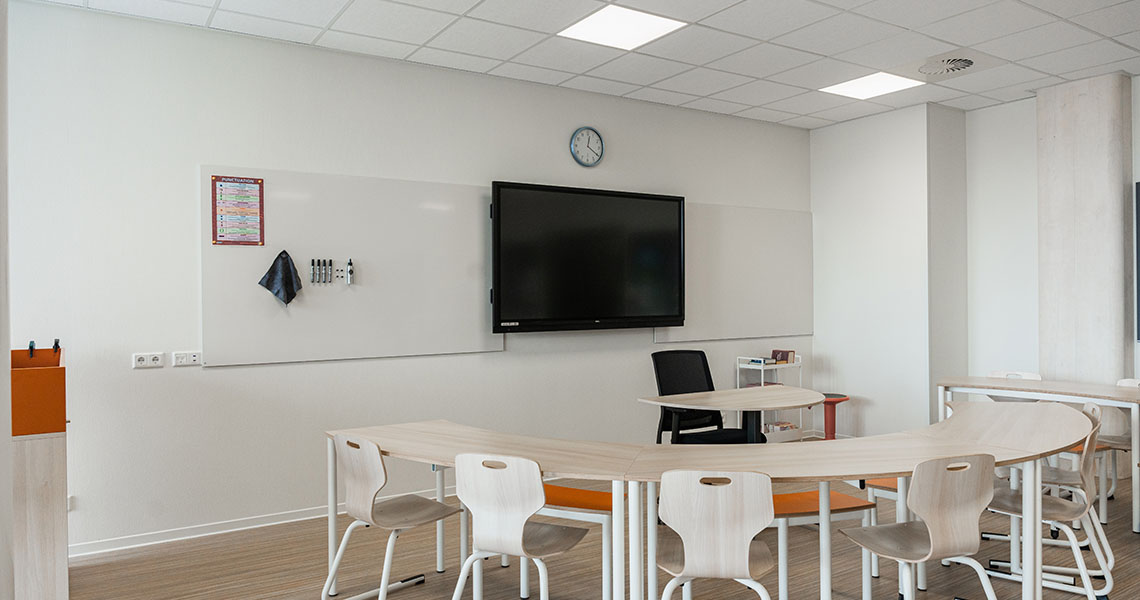
Beyond whether text is visible at all, check whether normal handwriting size remains legible, since a board can technically be visible from the back row while still requiring uncomfortably large lettering to read clearly. Also check for glare at different times of day, since a sightline that works under overcast light may not hold up under direct sun, and test with the room at least partially occupied where practical, since an empty-room test misses the effect of seated students partially blocking sightlines from behind them.
If the room will host both lectures and smaller seminar-style sessions, test under both seating arrangements where practical, since a configuration that works for a full lecture layout does not automatically work once desks are rearranged for group work.
Marker colour is worth testing at the same time — black and dark blue reliably show up better than lighter colours at longer viewing distances, which is worth confirming with whoever will actually be teaching in the room.
These checks together take little extra time once the test seat is already set up, so it is worth running through the full list in one session rather than treating each as a separate visit.
What to do if the test reveals a problem
If a sightline test reveals that the proposed size or position does not work, treat it as useful information rather than a setback. It is far cheaper to adjust the specification at this stage than after a board has been manufactured and installed, and understanding exactly why it failed usually points directly to the needed adjustment. Document a negative result as clearly as a successful one, since it prevents the same oversized assumption being repeated on a future, similar room.
Common fixes at this stage include shifting the board’s mounting position slightly, increasing its size, changing to a matte rather than gloss finish to reduce glare, or in some cases relocating a light fixture that was creating an unexpected hotspot on the surface.
Where a fix requires input from the supplier, sharing the specific sightline test results directly, rather than a general description of the problem, tends to produce a more accurate and faster proposed solution.
Whichever fix is needed, revisiting the sightline test once the change is made confirms the adjustment actually solved the problem rather than assuming it did.
Documenting the test, and why it's worth the effort
Take photos from the back row, noting the exact seat, time of day, and proposed size and height, so the record is useful if a similar test needs repeating for a comparable room. If your institution has several lecture halls of different sizes and shapes, avoid assuming a test in one room applies to all of them. For larger institutional orders, it’s worth specifying in the supplier contract that a sightline check will be conducted before final sign-off, since the cost of the test itself is negligible compared with correcting a poorly sized board after installation.
Keeping this documentation alongside the room’s general facilities file, rather than only with the original project paperwork, makes it easier for whoever manages the space years later to find and reference if a replacement or upgrade is ever considered.
A simple date-stamped photo folder, shared with whoever holds the estates records, is usually enough to make this genuinely useful later.
Looking for a large classroom whiteboard?
Finalising a size before ordering? Chameleon’s large classroom whiteboards team can help plan a sightline check before your specification is locked in.
Need immediate help and advice with your choice?