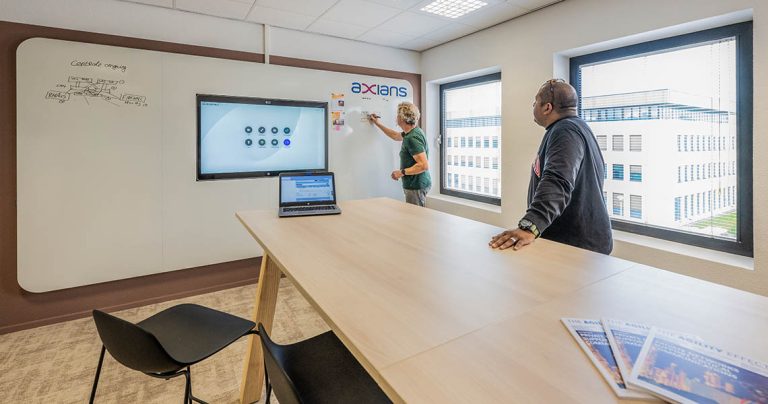
Buy a large dry erase board built for occasional use and put it into continuous daily service, and the surface can start showing wear far sooner than the warranty period suggests it should. Specifying for continuous use means checking surface material and construction against that reality, not against a general-purpose spec sheet. Get the specification right for how the board will actually be used and it holds up to that use for years.

Array
(
    [1049] => WP_Post Object
        (
            [ID] => 1049
            [post_author] => 1
            [post_date] => 2026-10-20 06:45:09
            [post_date_gmt] => 2019-08-05 13:54:24
            [post_content] =>
            [post_title] => Products
            [post_excerpt] =>
            [post_status] => publish
            [comment_status] => closed
            [ping_status] => closed
            [post_password] =>
            [post_name] => whiteboards-5
            [to_ping] =>
            [pinged] =>
            [post_modified] => 2026-10-20 06:45:09
            [post_modified_gmt] => 2026-10-20 06:45:09
            [post_content_filtered] =>
            [post_parent] => 0
            [guid] => https://chameleonwriting.falkor.alcor.cloud/?p=1049
            [menu_order] => 1
            [post_type] => nav_menu_item
            [post_mime_type] =>
            [comment_count] => 0
            [filter] => raw
            [db_id] => 1049
            [menu_item_parent] => 0
            [object_id] => 1049
            [object] => custom
            [type] => custom
            [type_label] => Custom Link
            [title] => Products
            [url] => #
            [target] =>
            [attr_title] =>
            [description] =>
            [classes] => Array
                (
                    [0] =>
                )

            [xfn] =>
        )

    [12842] => WP_Post Object
        (
            [ID] => 12842
            [post_author] => 82
            [post_date] => 2026-10-20 06:45:10
            [post_date_gmt] => 2023-08-31 08:07:16
            [post_content] =>
            [post_title] =>
            [post_excerpt] =>
            [post_status] => publish
            [comment_status] => closed
            [ping_status] => closed
            [post_password] =>
            [post_name] => 12842
            [to_ping] =>
            [pinged] =>
            [post_modified] => 2026-10-20 06:45:10
            [post_modified_gmt] => 2026-10-20 06:45:10
            [post_content_filtered] =>
            [post_parent] => 0
            [guid] => https://chameleonwriting.falkor.alcor.cloud/?p=12842
            [menu_order] => 68
            [post_type] => nav_menu_item
            [post_mime_type] =>
            [comment_count] => 0
            [filter] => raw
            [db_id] => 12842
            [menu_item_parent] => 0
            [object_id] => 12839
            [object] => page
            [type] => post_type
            [type_label] => Page
            [url] => https://chameleonwriting.com/en/references-3/
            [title] => References
            [target] =>
            [attr_title] =>
            [description] =>
            [classes] => Array
                (
                    [0] =>
                )

            [xfn] =>
        )

    [11862] => WP_Post Object
        (
            [ID] => 11862
            [post_author] => 82
            [post_date] => 2026-10-20 06:45:10
            [post_date_gmt] => 2023-08-21 13:36:51
            [post_content] =>
            [post_title] => pCon
            [post_excerpt] =>
            [post_status] => publish
            [comment_status] => closed
            [ping_status] => closed
            [post_password] =>
            [post_name] => pcon-data
            [to_ping] =>
            [pinged] =>
            [post_modified] => 2026-10-20 06:45:10
            [post_modified_gmt] => 2026-10-20 06:45:10
            [post_content_filtered] =>
            [post_parent] => 642
            [guid] => https://chameleonwriting.falkor.alcor.cloud/?p=11862
            [menu_order] => 69
            [post_type] => nav_menu_item
            [post_mime_type] =>
            [comment_count] => 0
            [filter] => raw
            [db_id] => 11862
            [menu_item_parent] => 0
            [object_id] => 4701
            [object] => page
            [type] => post_type
            [type_label] => Page
            [url] => https://chameleonwriting.com/en/information/chameleon-now-available-in-pcon/
            [title] => pCon
            [target] =>
            [attr_title] =>
            [description] =>
            [classes] => Array
                (
                    [0] =>
                )

            [xfn] =>
        )

    [32752] => WP_Post Object
        (
            [ID] => 32752
            [post_author] => 85
            [post_date] => 2026-10-20 06:45:10
            [post_date_gmt] => 2025-08-07 10:59:20
            [post_content] =>
            [post_title] => Order Samples
            [post_excerpt] =>
            [post_status] => publish
            [comment_status] => closed
            [ping_status] => closed
            [post_password] =>
            [post_name] => order-samples-2
            [to_ping] =>
            [pinged] =>
            [post_modified] => 2026-10-20 06:45:10
            [post_modified_gmt] => 2026-10-20 06:45:10
            [post_content_filtered] =>
            [post_parent] => 0
            [guid] => https://chameleonwriting.com/?p=32752
            [menu_order] => 70
            [post_type] => nav_menu_item
            [post_mime_type] =>
            [comment_count] => 0
            [filter] => raw
            [db_id] => 32752
            [menu_item_parent] => 0
            [object_id] => 32718
            [object] => page
            [type] => post_type
            [type_label] => Page
            [url] => https://chameleonwriting.com/en/chameleon-samples/
            [title] => Order Samples
            [target] =>
            [attr_title] =>
            [description] =>
            [classes] => Array
                (
                    [0] =>
                )

            [xfn] =>
        )

    [26482] => WP_Post Object
        (
            [ID] => 26482
            [post_author] => 85
            [post_date] => 2026-10-20 06:45:10
            [post_date_gmt] => 2025-01-17 11:08:57
            [post_content] =>
            [post_title] => Information
            [post_excerpt] =>
            [post_status] => publish
            [comment_status] => closed
            [ping_status] => closed
            [post_password] =>
            [post_name] => information-2
            [to_ping] =>
            [pinged] =>
            [post_modified] => 2026-10-20 06:45:10
            [post_modified_gmt] => 2026-10-20 06:45:10
            [post_content_filtered] =>
            [post_parent] => 0
            [guid] => https://chameleonwriting.com/?p=26482
            [menu_order] => 71
            [post_type] => nav_menu_item
            [post_mime_type] =>
            [comment_count] => 0
            [filter] => raw
            [db_id] => 26482
            [menu_item_parent] => 0
            [object_id] => 26482
            [object] => custom
            [type] => custom
            [type_label] => Custom Link
            [title] => Information
            [url] => #
            [target] =>
            [attr_title] =>
            [description] =>
            [classes] => Array
                (
                    [0] =>
                )

            [xfn] =>
        )

    [36031] => WP_Post Object
        (
            [ID] => 36031
            [post_author] => 85
            [post_date] => 2026-10-20 06:45:10
            [post_date_gmt] => 2025-11-12 11:54:33
            [post_content] =>
            [post_title] => ProTips
            [post_excerpt] =>
            [post_status] => publish
            [comment_status] => closed
            [ping_status] => closed
            [post_password] =>
            [post_name] => protips-2
            [to_ping] =>
            [pinged] =>
            [post_modified] => 2026-10-20 06:45:10
            [post_modified_gmt] => 2026-10-20 06:45:10
            [post_content_filtered] =>
            [post_parent] => 0
            [guid] => https://chameleonwriting.com/?p=36031
            [menu_order] => 78
            [post_type] => nav_menu_item
            [post_mime_type] =>
            [comment_count] => 0
            [filter] => raw
            [db_id] => 36031
            [menu_item_parent] => 0
            [object_id] => -325
            [object] => kennisbank
            [type] => post_type_archive
            [title] => ProTips
            [type_label] => Post Type Archive
            [url] => https://chameleonwriting.com/en/protips/
            [target] =>
            [attr_title] =>
            [description] =>
            [classes] => Array
                (
                    [0] =>
                )

            [xfn] =>
        )

    [19332] => WP_Post Object
        (
            [ID] => 19332
            [post_author] => 3
            [post_date] => 2026-10-20 06:45:10
            [post_date_gmt] => 2024-05-14 11:58:44
            [post_content] =>
            [post_title] => Contact
            [post_excerpt] =>
            [post_status] => publish
            [comment_status] => closed
            [ping_status] => closed
            [post_password] =>
            [post_name] => contact-4
            [to_ping] =>
            [pinged] =>
            [post_modified] => 2026-10-20 06:45:10
            [post_modified_gmt] => 2026-10-20 06:45:10
            [post_content_filtered] =>
            [post_parent] => 0
            [guid] => https://chameleonwriting.com/?p=19332
            [menu_order] => 79
            [post_type] => nav_menu_item
            [post_mime_type] =>
            [comment_count] => 0
            [filter] => raw
            [db_id] => 19332
            [menu_item_parent] => 0
            [object_id] => 19332
            [object] => custom
            [type] => custom
            [type_label] => Custom Link
            [title] => Contact
            [url] => https://chameleonwriting.com/en/contact/
            [target] =>
            [attr_title] =>
            [description] =>
            [classes] => Array
                (
                    [0] =>
                )

            [xfn] =>
        )

    [12326] => WP_Post Object
        (
            [ID] => 12326
            [post_author] => 82
            [post_date] => 2026-10-20 06:45:10
            [post_date_gmt] => 2023-08-25 07:08:58
            [post_content] =>
            [post_title] => Languages
            [post_excerpt] =>
            [post_status] => publish
            [comment_status] => closed
            [ping_status] => closed
            [post_password] =>
            [post_name] => taalschakelaar-6
            [to_ping] =>
            [pinged] =>
            [post_modified] => 2026-10-20 06:45:10
            [post_modified_gmt] => 2026-10-20 06:45:10
            [post_content_filtered] =>
            [post_parent] => 0
            [guid] => https://chameleonwriting.falkor.alcor.cloud/?p=12326
            [menu_order] => 80
            [post_type] => nav_menu_item
            [post_mime_type] =>
            [comment_count] => 0
            [filter] => raw
            [db_id] => 12326
            [menu_item_parent] => 0
            [object_id] => 12326
            [object] => custom
            [type] => custom
            [type_label] => Language switcher
            [title] => EN
            [url] => #pll_switcher
            [target] =>
            [attr_title] =>
            [description] =>
            [classes] => Array
                (
                    [0] => pll-parent-menu-item
                )

            [xfn] =>
        )

)
1
News
Specifying a large dry erase board for continuous daily use
What continuous daily use actually demands
A board in near-constant use needs to withstand repeated erasing, frequent magnet use and long stretches without a deep clean, since teams rarely pause daily work for maintenance. Specifying for this reality, rather than for an idealised occasional-use scenario, avoids a board that ages faster than expected. This also means the board is rarely, if ever, completely empty, which affects how much genuinely free space a team can expect at any given moment. This also affects how quickly a board needs replacing if the wrong specification is chosen, since a board under-specified for continuous use tends to show its limitations faster than one that was appropriately matched to the use case from the start. Teams often underestimate this until they compare notes with a similar team using a board specified for lighter use, at which point the difference in wear becomes obvious.
Surface material as the first decision
Ceramic steel is generally the starting point for continuous daily use, given its resistance to ghosting and scratching compared with melamine or lacquered steel. This decision affects nearly every other choice that follows, from expected lifespan to cleaning routine. This decision is harder to reverse than most others in the specification, since changing surface material after installation effectively means replacing the board. This is also the detail most worth confirming in writing before production begins, given how difficult it is to change afterwards.
Sizing for the busiest sessions, not the average
A board sized for typical use often falls short during the team’s busiest sessions, which is when running out of space actually causes friction. Sizing for the demanding end of daily use, rather than the average day, tends to avoid this. It helps to ask what the room looked like on its most demanding day in the past year, rather than relying on a general impression of typical use. This is particularly relevant for teams that host occasional larger workshops, since those sessions are usually what a board is judged against, not the quieter days in between.
Mounting and frame considerations
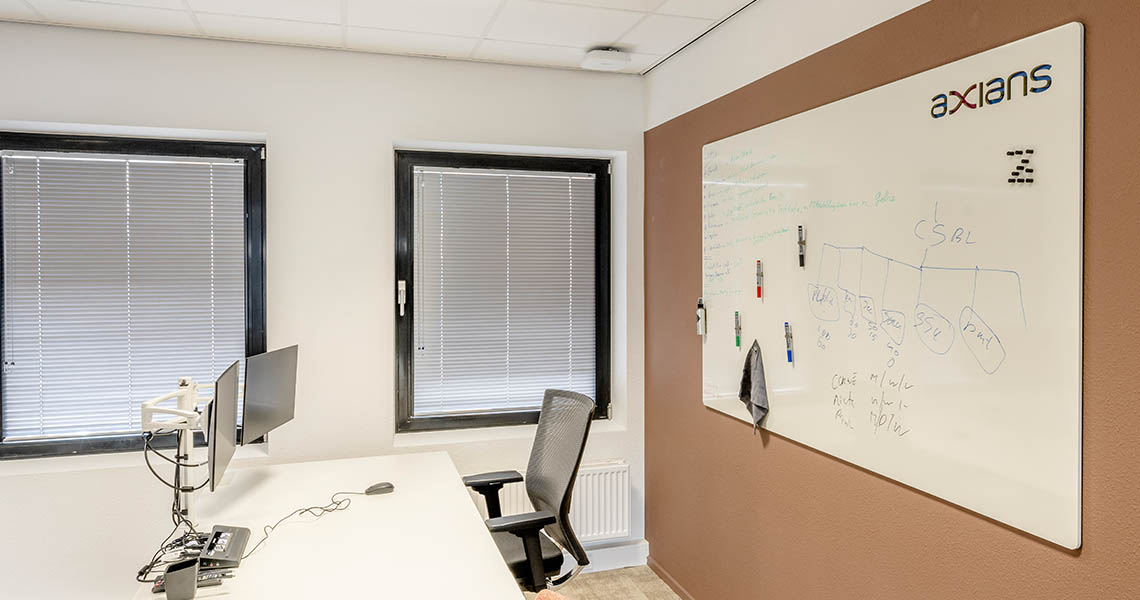
Continuous use puts more strain on mounting hardware than occasional use, particularly if the board is regularly leaned on or bumped. A secure, wall-appropriate mounting method matters more here than for a board used only occasionally. This is particularly relevant in shared spaces, where a board may be leaned on, gestured towards, or bumped into far more often than in a private office. Checking the wall’s construction before finalising a mounting method avoids discovering a mismatch only once installation is already underway.
What a complete specification includes
A specification for continuous daily use typically covers surface material, panel size, mounting method and finish together, since each affects how well the board holds up under the same conditions. A written specification, rather than a verbal agreement, also makes it easier to confirm exactly what was agreed if any details need revisiting during installation. Leaving any one of these details vague tends to surface as a problem only after installation, when it is considerably harder and more expensive to correct. A specification reviewed jointly by whoever manages the room day to day, not just whoever is placing the order, tends to catch practical details that might otherwise be missed.
A short checklist for continuous-use specification
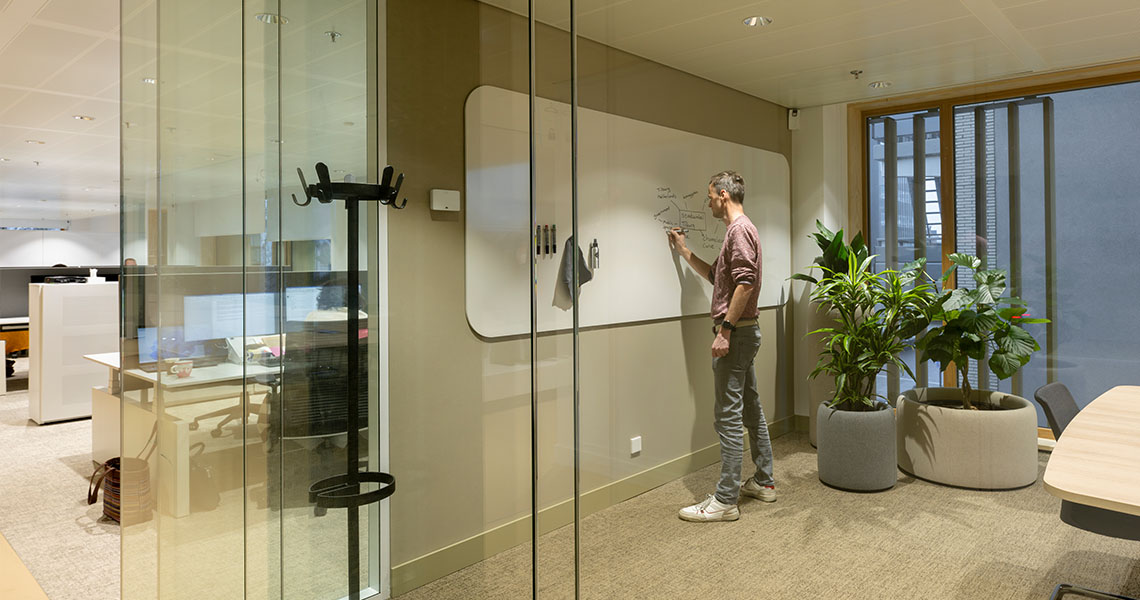
A handful of details tend to shape this specification more than anything else: expected number of daily users, approximate writing hours per day, cleaning frequency, the wall substrate the board will be mounted on, the direction of the room’s main light source, and whether magnetic functionality is required. Working through these points before approaching a supplier makes the resulting conversation considerably more efficient, since most of the specification decisions that follow are shaped by the answers to these questions.
Specifying for reality, not for a showroom
The common thread across these decisions is specifying for how the board will actually be used, not for how it looks when new. A board built around continuous daily use from the outset tends to need far less intervention over its lifetime than one specified for an idealised, lighter use case. A specification built around these questions from the outset tends to need far less revisiting once the board is actually in daily use. A specification built this way also tends to age better, since it was designed around how the room actually works rather than around assumptions made before the space was in use. Revisiting it once a year, particularly after any change in team size or working pattern, keeps it aligned with reality rather than with the conditions that existed when it was first written.
Looking for a large dry erase board?
See how Chameleon large dry erase boards are specified in ceramic steel for teams that rely on continuous daily use.
Need immediate help and advice with your choice?